
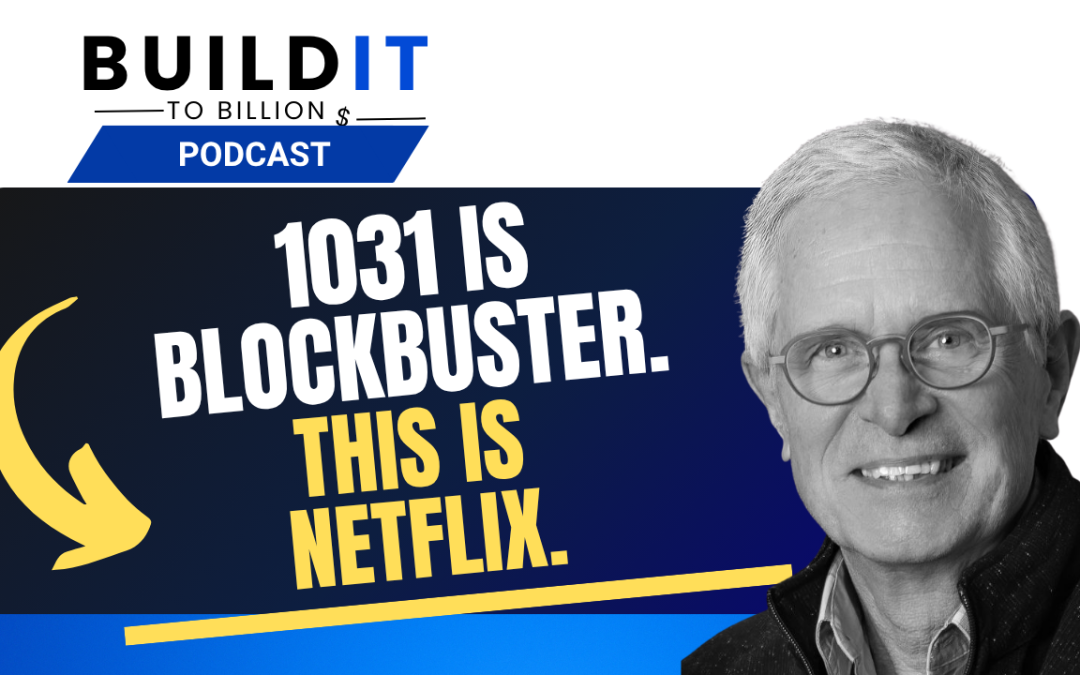
For years, the 1031 exchange has been a cornerstone strategy for real estate investors seeking to defer taxes and build wealth. But in 2026, a shifting economic landscape is exposing a harsh reality: what once created momentum is now creating pressure. Rising interest rates, tighter lending, and limited quality inventory are forcing investors into rushed decisions—often trading strong fundamentals for the urgency of meeting 1031 deadlines. The result? Deals that look acceptable on paper but quietly erode cash flow, increase leverage, and limit long-term flexibility.
What’s emerging is a hidden “debt trap.” Investors aren’t just deferring taxes—they’re inheriting risk. The rigid structure of the 1031 exchange is clashing with a market that demands patience and precision, leaving many locked into suboptimal assets simply to avoid a taxable event. As more investors feel the strain of negative leverage and compressed returns, it’s becoming clear: the strategy that once built wealth may now be putting it at risk.
Episode Highlights Here:
Brett
Before we jump into this episode, I want to invite you to join our community to help you become abetter steward scale to billions and ultimately give more or all of it away. All I want you to do isto click the subscribe button right now. I love your support. It’s incredible to see yourcomments, and we’re just getting started. I can’t wait to go on this journey with you. Thank youso much for subscribing. It means the world to me. Welcome to the build it to billions podcastwhere we guide successful entrepreneurs and investors on their journey from millions tobillions. We believe the key to scaling and compounding your wealth and life starts every single day with the mindset and practice of stewardship over ownership and applying billionaire biblical principles. Our ultimate goal is to be scale and compound your wealth and life so we can give more all of it away to help MVPs. My name is Brett Swartz, and I’m joined today by Glenn Hanson, who’s got an amazing, incredible background. He’s the CEO and founder of Colony Hills capital LLC in the greater Boston area. And he’s a seasoned private investor entrepreneur and boasts four decades of ADAPT leadership and steering thriving ventures. And he’s got an amazing background, and today we’re going to be talking about basically why operators should stop defaulting to 1031, exchanges and start offering a more flexible exit path with the deferred sales trust. Quick background, I, our company capital gains tax solutions, offers deferred sales trust for clients that are exiting Bitcoin businesses, real estate and have large, large, massive capital gains taxes. But Glenn, you know, one of the biggest challenges is that people get stuck in these 1030, ones, or they get in these positions of trying to put deals together. But the tax dog sometimes can sink the ship right, and it can hurt opportunities and deals. Maybe we can start with a little bit of your background and your expertise and then kind of dive into that deal store that we were just chatting about.
Glenn
Sure, yeah, actually talk about my background. You went back four decades. I was reflecting on that just the other day, and I get my pilot’s license back then, and it really helped steer my businesses to a more successful conclusion. If you ever think about it, manufacturing scrap rate is allowed to be if 1% or greater is your scrap rate, it’s okay, right? And if you think about in the United States, there’s 3600planes in the air at any one time. We had a 1% scrap rate; we’d be losing 30 planes a day. And why is that? How is it possible that the airlines can do and function at that type of quality control, and we in business, sometimes miss the mark, and I bring that up because you started with 440 years ago, and that’s driven me to always look for solutions to keep us from crashing, right? So, when I think about the 1031 exchange today, I have clients that come to me with 1031 money, and we can’t help them because we can’t identify the deals fast enough. And so, I wanted to reach out to you guys. Brett, having met you a couple years ago, followed your success, and it’s neat to get caught up a bit, but I wanted to just try to understand how I can utilize 1031to help my clients. And of course, that benefits us, because we become a resource for them. And when we first met, and you talked about 1031 or what you talked about the tax gain solution that you have, it wasn’t something on my radar, and I’m not sure that you would fully bake the way to manage it. So, I’d really like to dig in under the hood and see what have you figured out? So that we can, we can transfer those people over to you, and you can satisfy them, and then hopefully they’ll invest more with us,
Brett
absolutely. And I think it’s good to start with, like the problem, right? The problem is obviously a big tax bill. The other problem with the 1031 is a short timeframe. And the next problem is it doesn’t give you an opportunity to diversify, or to dollar cost average, or to really have the liquidity right. And we’re seeing some of these things coming to come into picture right here. I mean, think about why some of the deals, especially multifamily mobile home park, haven’t worked out well. People bought 2021, 2022 and they likely, or could have overpaid at that point. A lot of it because of the 1031, driving values right at that point too. Cost seg and bonus depreciation, another tax tool that was increasing the valuations of properties because people could bonus depreciate, that’s also coming back this year as well. So, understand that tax flow and tax deferral incentives often drives value, and it can be inflated value. Now, no one knew what the interest rates would do, at least to the extent that they did it. You know, doubling, that’s kind of hard to predict, but still, just think about that. If we went, if we had a crystal ball, we’d go back to 21 we could probably say this is pretty high. 22 this is probably pretty high. This might be the peak. Least close to it. You know, we were in this bull run of, you know, 1012, 13 years of the market, right? And then, you know, there’s typically corrections. I think around year 10, eight, 910, maybe, you know, anyway, so you look at this and you say, okay, what could we have done in a perfect world? You would have sold everything.
Brett
So, if you like this little, short clip of the interview I just did, click over here to watch the full interview, and please don’t forget to subscribe. Thanks so much, everybody
Watch the episode here:
Important Links:
About Glenn Hanson

Glenn Hanson is a seasoned real estate investor and the driving force behind Colony Hills Capital, where he specializes in helping investors navigate complex market cycles with clarity and confidence. With a deep understanding of capital markets, investment strategy, and risk management, Glenn has built a reputation for identifying opportunities that align with long-term wealth creation rather than short-term speculation. His approach emphasizes disciplined underwriting, strategic capital deployment, and protecting investor downside in an increasingly volatile environment.
Through his leadership at Colony Hills Capital, Glenn works closely with high-net-worth individuals and investment partners to structure deals that prioritize flexibility, cash flow, and sustainable growth. Known for his forward-thinking insights and practical guidance, he is particularly focused on helping investors avoid common pitfalls—such as overleveraging and forced acquisitions—while uncovering smarter, more adaptive strategies for preserving and compounding wealth in today’s evolving real estate landscape.
Love the show? Subscribe, rate, review, and share!
- capitalgainstaxsolutions.com
- Capital Gains Tax Solutions Facebook
- Capital Gains Tax Solutions Twitter
- Capital Gains Tax Solutions Tiktok