
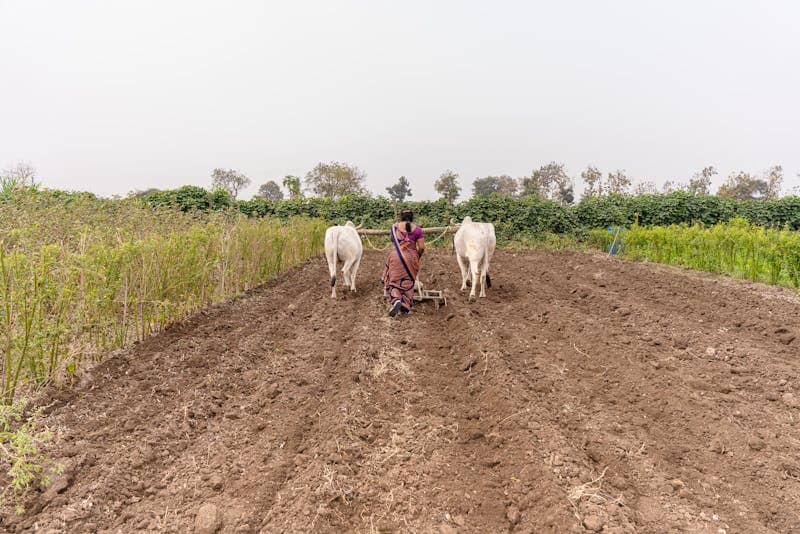
It is not uncommon for landowners to be hesitant to sell property due to the potentially huge capital gains taxes owed on the sale. Farmland is often passed down for generations, meaning that the cost basis starts quite low, and the gains when it is sold can be very large.
While everyone wants to know how to avoid capital gains tax when selling farmland, there is no way to completely avoid taxes altogether. However, several options exist for reducing, delaying, or minimizing the taxes owed on farmland sales.
What Qualifies as Farmland, and Why is it Different?
While an apartment building and undeveloped farmland are both real estates, they are treated differently by finance professionals. For example, residential and commercial real estate have a specific use life and depreciate over time. Raw farmland, on the other hand, does not depreciate as land is presumed to have an unlimited useful life.
The IRS defines farmland as land used to cultivate agricultural or horticultural commodities for profit. For example, land used to raise cattle or chickens or grow Christmas trees or alfalfa for a profit.
Determining tax liabilities for a working farm can be complicated. When selling a farm, the raw land, livestock, buildings, and equipment are all treated differently and fall under separate tax regulations. The following are meant to be a broad overview, but we suggest working with a qualified and experienced tax professional to help you make the most of your farm sale.
Here are a few methods for reducing or delaying your capital gains tax liability when selling farmland.
Property Transfer
If you transfer your property to your heirs when you die, it doesn’t completely eliminate capital gains taxes, but the cost-basis is stepped up to the current fair market value at the time of your death. That means that if they were to sell the property soon afterward, they may not owe any taxes, and if they hold it for a longer period of time, they will only owe taxes on the appreciation from when they inherited the property.
Donate to Charity
You can donate farmland to charity before selling it, and you would not owe taxes on the land that you donate. You can also deduct the donation from your taxable income. There is a limit on the amount you can deduct, but excess amounts can be rolled over to future years.
1031 Exchange
A 1031 Exchange is probably the most well-known tax strategy for deferring taxes on real estate. It can be used for farmland as well. A 1031 exchange allows the seller to delay paying capital gains taxes as long as the proceeds of the sale are reinvested back into a “like-kind” property.
A 1031 Exchange is a good tool, but there are a number of limitations that limit its flexibility. In order to defer taxes, the exchange needs to happen within 180 days. In a market where farm properties are tightly held, finding a replacement property in time could be very difficult. It also requires you to reinvest all of your proceeds, meaning that you have to find a replacement property that costs the same, or more than what you earned. So, while deferring taxes indefinitely is appealing, some investors find themselves taking on more and more debt as they make repeated 1031 exchanges.
Delaware Statutory Trusts
A Delaware Statutory Trust is where multiple investors hold a fractional interest in the trust’s real estate holdings. Notably, Delaware Statutory Trusts recently became eligible for 1031 exchanges, meaning that you can diversify your risk by reinvesting your real estate proceeds into a Delaware Statutory Trust.
If you are interested in reinvesting in farmland, a drawback of Delaware Statutory Trusts is that agricultural properties make up a small percentage of the overall $3 billion market. You also want to carefully compare Delaware Statutory Trust sponsors, as their fees can vary significantly.
Deferred Sales Trusts
A Deferred Sales Trust (DST) is a versatile and reliable way to defer capital gains taxes on farmland. With a DST, you sell your property to the trust, which then sells it to a buyer and retains the proceeds. In return, the trust issues you a promissory note. Since you never directly receive the proceeds from the sale, your capital gains remain in a deferred state. The trust reinvests the proceeds, and you receive payments according to the terms of the promissory note. This note can be structured to include interest-only payments, thus keeping the owed capital gains tax 100% deferred. You will pay ordinary income tax on the payments received; if a payment includes principal, capital gains tax would be owed on that amount.
With a DST, you are not limited by time restrictions or like-kind requirements. You could structure the trust to reinvest into real estate, stocks, cryptocurrency, or a Delaware Statutory Trust. This gives you flexibility in timing, as well as the ability to diversify your investments and keep some of your assets liquid.
While simple in theory, a DST requires a team of professionals to execute properly. If it is something you are interested in, reach out to an experienced Deferred Sales Trust trustee. They can guide you through the process of setting up your trust and selling your property without realizing all the capital gains at once.
Video

Infographic
It’s not possible to completely avoid capital gains tax when selling farmland, but you can reduce, delay, or minimize the taxes owed. The infographic below explores methods for reducing your capital gains tax liability when selling farmland.
