

Drew Spaventa is the fearless founder and CEO of The Spaventa Group (“TSG”). After over a decade in finance as an investment manager, managing director, and fund manager, Drew decided to achieve his vision of creating an “investment firm of tomorrow”, and thus TSG was born. Drew is responsible for leading TSG’s vision and managing TSG’s day-to-day operations.
Episode Highlights Here:
Andrew
You have two options: either sit on the sidelines waiting for a so-called doomsday or continue to put capital at work. So my strategy is to always put capital to work, no matter what, always go into companies that we believe are going to be going concerns and be around for the long term. And in situations that we’ve seen over the last 12 to 18 months, if we could go in and buy more of the same company out of, you know, at a value because of macroeconomic, the macroeconomic situation, that’s something that we’re going to take advantage of.
Pierce
So you’ve been in the alternative investment space for for quite some time, financial advising and the tech sector speak a little bit to that, how’s the market doing out there with with that whole situation, you know, post pandemic, and, you know, just what’s going on with you guys, high interest rate environment? Tell us a little bit about the macroeconomics of what’s going on?
Andrew
Yeah, I mean, on the financial planning side band, we’re obviously long term holders. And it’s, I would say, obviously, it’s, it’s more painful for people that are a little bit older. But at this point, we don’t really pay attention to the short term fluctuations in the volatility, at least on the wealth management, financial planning, so to a certain extent, but being that it’s traditionally buy and hold, and we’re more conservative, these are just pain points that eventually wipe away on the asset management front, where we do manage private investment vehicles, many of which are alternative investment type asset classes, like venture capital and venture capital secondaries, the pain could be felt over the last 18 months. That said, you know, I’ve kind of been beating this drum about, at least on the VC and equity side, about all these robust valuations over the last few years, you know, where you had companies that were burning through cash being valued at just insane multiples. Companies like, you know, FTX has just one. And we all know how that came into effect. So it was a much needed reset on the VC front, for everybody to kind of at least wake up and say, Okay, we actually have to invest in companies that are being capital efficient. So and that’s the thing, you know, going back into 2016 1718, when I started getting really heavily into VC secondary space, you could tell that valuations were lofty, but there were still once companies had liquidity events, and they went public, there was still a lot of meat left on the bone for our LPs to make a significant ROI. So you have two options, either sit on the sidelines, waiting for a so-called doomsday or continue to put capital at work. So my strategy is to always put capital to work, no matter what, always go into companies that we believe are going to be going concerns and be around for the long term. And in situations that we’ve seen over the last 12 to 18 months, if we could go in and buy more of the same company out of, you know, at a value because of the macro economic situation, that’s something that we’re going to take advantage of. So that’s what we really have been doing. That being said, I think it’s a really opportune time for some specific portfolio companies to have hours to go in there and reinvest, especially because of the macro economic conditions. Moving forward, I think there’s going to be more focus on companies that are definitely capital efficient, and not just hemorrhaging cash, which I think should be the standard the entire time. Right. But you know, and as, as everything you have everybody looking at bet on the bet, you know, generative AI has exploded over the last six to eight months. Yeah, because of the GPT chat. And what open AI has been able to do, and prior to that it was electric vehicles, right. Prior to that it was cannabis, and you know, crypto and blockchain. So there’s always that hot trend, we don’t like to really capitalize on hot trends, we like to focus on the specific company, and really strategize from there. Because at the end of the day, you could, you could put your money to play in the hot industry, the hot hand, sort of, for lack of a better word. But as long as you’re allocating your capital to the companies that you think are going to be, you know, perform, once they do go public, and over the next 510 1520 years, you should, in theory, be in a good spot.
Pierce
Yeah, absolutely. And so that kind of leads me to this question. Right. So, the strategy that it sounds like is to invest in these, these, you know, basically, I don’t know if they’re startups or not, but you’re coming in as a VC or an angel investor, right? Before you know, your series A or, or, you know, whatever, maybe you’re hitting the series A or possibly Series B, whatever, right? You’re confusing capital entities prior to going public, right. So is the strategy to really get them to go and IPO on the open market and then at that point, right everyone cashes out or how do you guys how do you guys strategize for that? Depends on
Andrew
what the stages I mean, if you’re going in with an angel investment or Series A, the major thing that you’re planning on is the company actually not going bankrupt because you know, because it’s you know, as an angel investment is series A there’s really no Not that much of a track record to actually know whether the company is going to work it out. So it’s cliche, but you’re banking on the management team, right? So the further you get along in the stage, the lifecycle as a company, once you get to that mid to later stage, the Series C, series D, so on and so forth, which has been the stage that we’ve been focusing exclusively on for the past several years, then it becomes more about Alright, how’s the company executing? What is going to be the exit strategy here, where they’re going to be over the next two to five years? Is the valuation that’s being currently raised right now, how much of a valuation step up from round to round? Is it getting lofty? Once this thing does have a liquidity event? And we anticipate it going IPO and mind you, it’s never guaranteed that it does go public. But let’s just say it does, is there going to be enough retail to man institutional demand for our LPs to make an investment, so or excuse me a return on their investment rather. So those are the things that we have to consider about once because once you get to that mid to late stage, at least the company has somewhat of a track record. So it’s a really beautiful balance of risk and reward where it’s not as risky as a startup that has a series A or is even ahead, but at least there could be some reward in theory, given that the company continues to execute in the private market. Before they decide, You know what, we’re going to file that one and finally, go public.
Watch the episode here:
Important Links:
About Andrew Spaventa
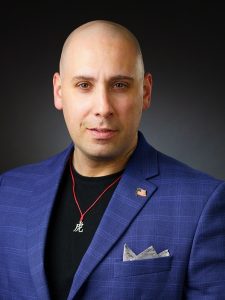
Drew Spaventa is the founder and CEO of The Spaventa Group, a leading investment company. He commands over a decade of experience as an investment manager, equities trader, research analyst, fund manager, and executive and currently holds a series 65 securities license.
The Spaventa Group (“TSG”) is a transformative investment company that specializes in innovative investment opportunities. TSG is an associate partner of the MLS 2021 champions, the NYC Football Club, and Drew is a member of the Forbes Finance Council. TSG is also a Principal Member of the Metaverse Standards Forum.
Drew is hyper-focused on creating and investing in new, innovative wealth-building assets and emerging technologies.
Drew’s hobbies include working out (training steel mace, clubs, & kettlebells), Muay Thai, cooking, reading, and traveling. As an avid movie aficionado, Drew loves dropping both obscure and famous one-liners and quotes.
- capitalgainstaxsolutions.com
- Capital Gains Tax Solutions Facebook
- Capital Gains Tax Solutions Twitter
- Capital Gains Tax Solutions Tiktok