

Meet DJ McClure, Vice President of Business Development at NFE. With over a decade of account management and marketing experience, DJ specializes in strategic growth and management of nationwide partnerships. His expertise lies in consulting with clients, finding cost-saving solutions for flood zone properties, and adding value to their portfolios. Originally from Kentucky, DJ holds a bachelor’s degree in psychology from Georgetown College and a master’s degree in Spanish from the University of Louisville. He’s lived in various countries and now resides in Florida with his wife, sharing a passion for traveling and attending Grand Slam tennis tournaments. When not working, DJ can be found running, perfecting his golf swing, and cheering for the Tampa Bay Buccaneers and Lightning.
Episode Highlights Here:
Brett
Fantastic. Sequent, DJ McClurg, National Flood experts.com, National Flood experts.com You’re helping people connecting people solving problems, love it. So let’s dive right in to the topic at hand, which is the bottom line solution is to lower flood insurance costs. Let’s face it, like flood insurance and insurance in general, are astronomical highs, right? But maybe you’ll tell us the rest of where we’re really at with that. And, and diving right into what’s the problem that’s going on right now, DJ, when it comes to this insurance stuff?
DJ McClure
Well, FEMA just changed their rating system here within the last few years. And that’s been a huge topic of conversation, if you followed it at all in the news. In particular, if you’ve ever bought a property in a flood in a flood zone in the last few years, you know what I’m talking about. So if he was older, the rating system was what they considered to be outdated. And so they introduced what’s called Risk Rating 2.0, which is designed to be a more accurate way of assessing flood risk for properties around the country. And so what it’s done is it’s made the rating model a little more subjective than it was before, and they’ve introduced new variables. But it’s created quite a domino effect for pricing increase around certain parts of the country. And the problem with it currently, is that there’s still an overwhelming lack of transparency, that insurance brokers are really battling and then for the property owner to understand, you know, why the same property, you know, can have such varying costs from seller to buyer, or, you know, from something they may have bought a flood policy on two years ago, you know, to buying a policy on the property next door today, and why the costs can be 10x what they used to be, so it’s, it’s quite the conversation these days.
Brett
Absolutely. It’s a nightmare for multifamily owners trying to underwrite their properties or buying assets where the insurance costs are 10 axing right, it’s very, very challenging. It hurts affordable housing. You know, our ability for people to build housing, to buy housing, to renovate housing, because the cost continues to go up. So I got it. So that’s the problem. I think, Austin, you might have touched on just the national disasters that are going on, because I know California, it’s like fire insurance just through the roof. Right? They’re just cutting insurance altogether. And then you have like Texas and Florida for like hurricanes and floods are, you know, just talking about the overall just affect the, you know, the overall environment, and just these these big disasters that are happening that are increasing the cost for insurance?
DJ McClure
Yeah, so I mean, I’ll speak to kind of insurance in general, I’m not an insurance broker just being fully transparent there. So you know, what you’re seeing is, essentially carriers within certain parts of the country that are choosing to not involve themselves in those areas. And you’re seeing that within the fire markets. We hear about that within wind markets around Florida, and other parts of the Gulf Coast. And so you had a trickle down effect with the amount of access to, you know, the type of premium costs that existed in prior years. And so as you’ve seen year over year incur increases from the property side, you know, now you’re seeing similar effects on the flood insurance side. Now, the main difference between flood insurance and other lines of insurance is that you do have a program through FEMA that is federally regulated. And so anyone within most scenarios can get access to a flood policy. But what you’ve seen is a lot of private flood companies choosing to get into the flood insurance market. And kind of similarly, they’re able to pick and choose which parts of the country they want to offer policies. And then they can also choose when to not renew those policies. So that’s kind of in tandem with FEMA changing their rating system. In some instances, if you leave the National Flood Insurance Program, let’s say you go to the private market, because they’ve got a really attractive price point. But then two years later, they give you a non renewal, with the way famous programs work now. They’ve introduced what they call their full risk premium. And it’s the ceiling price that FEMA thinks that you should be paying for that particular structure in that part of the country. And so if someone gets a non renewal from the private market, and they have to come back to the NFIP, at that ceiling price from day one, it can be quite a dramatic uptick in pricing. So it’s really making investors have to think, big picture with choices they’re making between which carrier they go with for their flood insurance.
Watch the episode here:
Important Links:
About DJ McClure
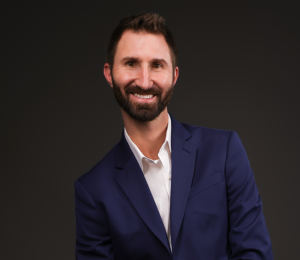
As Vice President of Business Development, DJ’s focus centers around the strategic growth and management of nationwide partnerships, consulting with new and existing clients and serving as a resource for NFE’s team of National Account Executives.
He brings a varied background of over a decade of account management and marketing experience to the team. Working within a variety of vertical commercial real-estate markets, including multi-family, DJ consults with clients to find unique cost-saving solutions for their flood zone properties as part of their overall value-add strategy. To date, he has helped clients save well over $3M and add over $50M in property value.
Originally from Kentucky, DJ earned his bachelor’s degree in psychology from Georgetown College, where he played tennis. He also holds a master’s degree in Spanish from the University of Louisville. During and after college, DJ spent time living in Chile, Costa Rica, Puerto Rico, and Spain. He now enjoys traveling with his wife – their goal is to attend all Grand Slam tennis tournaments at least once! Now a Floridian, DJ spends his free time running, working on his golf game, and cheering on the Tampa Bay Buccaneers and Lightning.
- capitalgainstaxsolutions.com
- Capital Gains Tax Solutions Facebook
- Capital Gains Tax Solutions Twitter
- Capital Gains Tax Solutions Tiktok